


Update — August 2026: The bill has passed, and we can now confirm Recommendations 2, 5 and 6 above made it into the final law: EN15194 grandfathering (Recommendation 2), disability, medical and age-based licensing exemptions (Recommendation 5), and a differentiated footpath speed limit in place of the original blanket proposal (Recommendation 6) — now set at 12 km/h on footpaths and when passing pedestrians on shared paths. For the current rules, read Queensland's E-Bike Law Has Passed.
Are Your E-Bikes Still Legal? What the New QLD Bill Recommendations Mean
The Queensland e-bike bill has been reviewed with key recommendations affecting riders. Here’s what Recommendations 2–6 mean for e-bike laws, legality, and riders in QLD right now.
If you have been following the progress of the Transport and Other Legislation (Managing E-mobility Use and Protecting Our Communities) Amendment Bill 2026, the committee's report is worth reading carefully. After receiving 3,029 submissions from riders, retailers, disability advocates, and industry bodies, the committee has recommended a number of significant amendments before the bill is passed.
The short version: the committee has heard the concerns raised by the e-bike community and responded with targeted, practical recommendations. None of this is law yet — but the direction is encouraging.
For background on the original drafting problems with the bill, particularly around the EN15194 standard, see our earlier breakdown of the EN15194 drafting problem.

What the Committee Actually Recommended
The committee made nine recommendations in total, including a recommendation that the bill be passed. Here is what Recommendations 2 through 6 mean in plain language for Queensland e-bike owners.
Recommendation 2: Your existing e-bike should stay legal
This is the most important recommendation for current owners.
The committee recommended that the bill be amended so that an e-bike is considered compliant if it meets the version of EN15194 that was in force at the time it was manufactured. The definition should be unambiguous, and it should allow for recognition of future versions of the standard as it is updated.
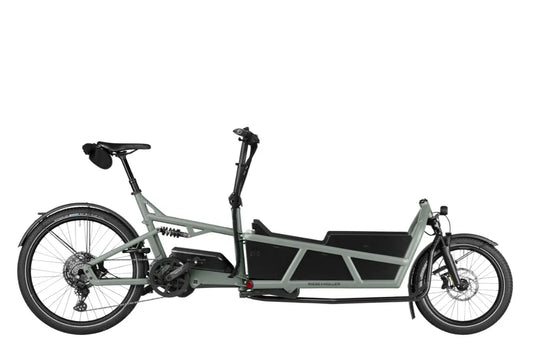
The recommendation also specifically calls for the inclusion of an appropriate standard for compliant e-cargo bikes with a maximum pedal-assisted speed of 25 km/h.

Recommendation 3: A pathway for e-trikes and adaptive devices
Not every device fits neatly into EN15194. The committee has recommended that the government investigate exemption mechanisms for devices that do not fully satisfy EN15194 but still meet the core safety criteria — namely the 25 km/h maximum speed and 250W motor limits.
The examples cited include e-trikes and adaptive mobility devices. This is a meaningful acknowledgement that the law should accommodate riders with disabilities or non-standard equipment, provided the underlying safety parameters are met.
Recommendation 4: A government assurance scheme to certify compliant bikes
One of the more practical problems with the original bill was the assumption that manufacturers could be relied upon to provide updated labels or documentation. For many imported or discontinued models, that is simply not realistic.
The committee recommended that the government establish a statewide assurance scheme, overseen by the Department of Transport and Main Roads (DTMR), that would certify and label currently compliant e-bikes at minimal cost to owners. The bill should be amended to give this scheme a formal basis.
Recommendation 5: Riders who cannot hold a driver's licence should not be excluded
The bill, as drafted, linked certain e-bike access provisions to driver licence status. The committee has recommended an amendment to ensure that people who are unable to obtain a driver's licence due to disability, medical condition, or age — but who can still safely ride an e-bike — are not locked out of using compliant devices.
DTMR would be tasked with developing an appropriate exemption framework.

Recommendation 6: Sensible speed limits in the right places
The proposed blanket 10 km/h footpath speed limit attracted significant feedback. The committee's recommendation refines it considerably:
- The 10 km/h limit applies only to footpaths in high pedestrian areas, with a clear definition of what qualifies.
- On other footpaths, the 10 km/h limit applies only within 10 metres of a pedestrian.
- The 10 km/h limit does not apply to shared paths unless signed.
- On shared paths, a 15 km/h limit within 10 metres of a pedestrian should be considered instead.
The EN15194 Grandfathering Win — Why Recommendation 2 Matters
If you read our earlier post on this topic — our earlier breakdown of the EN15194 drafting problem — you will know that the original bill created a significant problem for existing owners.
The bill, as drafted, referenced a specific version of EN15194 without making clear whether bikes certified to earlier versions would remain legal. Because the most recent amendment, +A1:2023, changed only the battery testing reference from EN62133-2 to EN50604-1, bikes manufactured and sold under earlier versions would potentially become non-compliant overnight, through no fault of the owner or the retailer.
Recommendation 2 directly addresses this. The principle of “manufactured version” grandfathering means that a bike's compliance is assessed against the standard that applied when it was built, not whatever version is current at the time of an inspection or enforcement action.
In practice, this means that if you purchased a fully legal 250W pedal-assist e-bike under the rules in place at the time, your bike should remain legal under the amended bill. It also future-proofs the legislation by building in recognition of subsequent updates to EN15194, so this problem cannot recur each time the standard is revised.
The Assurance Scheme — What It Means and Who It Helps
Recommendation 4 is the practical complement to Recommendation 2. Grandfathering a standard is only useful if owners can demonstrate compliance. For many e-bike owners — particularly those with older models, grey-market imports, or bikes from manufacturers that have since ceased trading — obtaining updated documentation is difficult or impossible.
A government-run assurance scheme would create a pathway for those bikes to receive formal certification without requiring the original manufacturer to be involved. DTMR overseeing the scheme means there is a consistent, statewide process rather than a patchwork of local interpretations.
This matters most for everyday commuters and recreational riders on budget-priced bikes, who are unlikely to have detailed compliance paperwork and would face the greatest practical difficulty under a strict documentation requirement.
What Is Still Not Law Yet
These are committee recommendations, not enacted law.
The committee has recommended that the government adopt these amendments before passing the bill. The government now needs to respond to the report, decide which recommendations to accept, draft the corresponding amendments, and steer those through parliament. That process takes time, and there is no guarantee every recommendation will be adopted in full.
The additional recommendations — investigating designated public access areas for compliant devices, providing guidance for shared e-mobility operators, and conducting a 12-month post-commencement review of the regulatory changes — round out a sensible framework, but they too depend on the government's response.
Until the amended bill passes and commences, the existing rules continue to apply.

What This Means for QLD E-Bike Owners Right Now
The practical position for most Queensland e-bike owners has not changed.
If you own a compliant 250W pedal-assist e-bike purchased through a reputable retailer, that bike remains legal under the current rules. The committee's report strengthens the case that it should also remain legal under the new regime — but the amendments need to be passed first.
If you are considering buying an e-bike, now is a reasonable time to do so, provided you buy from a retailer who can confirm the bike meets EN15194. The committee's recommendations suggest the framework will be clarified and sensibly implemented, rather than creating the retroactive compliance trap that the original draft risked.
If you have specific concerns about a device that does not fit squarely within EN15194 — an e-trike, an adaptive device, or an e-cargo bike — Recommendation 3 signals that there will be a pathway, but that pathway has not been defined yet.
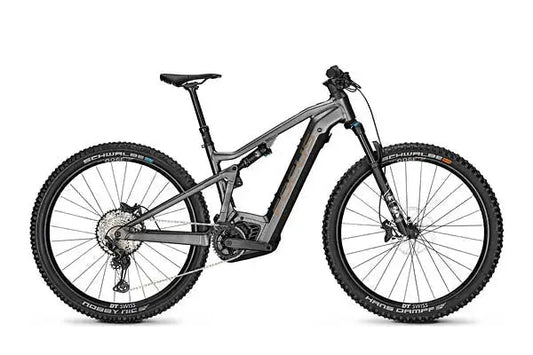
Browse Our Range or Get in Touch
We stock a carefully curated range of EN15194-compliant e-bikes suited to Queensland conditions, from everyday commuters to cargo and recreational models. Every bike we sell comes with full compliance documentation.
If you have questions about how these changes might affect your current bike or a purchase you are considering, contact our team directly — we are happy to talk through the specifics.
Browse our e-bike range | Contact us for advice
Electric Bikes Brisbane is actively engaged in the industry consultation process around the Transport and Other Legislation (Managing E-mobility Use and Protecting Our Communities) Amendment Bill 2026. We will continue to update our customers as the legislation progresses.


