


If you've been comparing the Amflow PX Carbon and the Amflow PR Carbon Pro, you've probably noticed something: on paper, they look almost identical. Same Avinox M2S motor. Same FOX 36 fork and Float rear shock at 160mm/150mm travel. Same Magura Gustav Pro brakes. Same SRAM S1000 Eagle Transmission. Same 29"/27.5" mullet wheel setup with Schwalbe Magic Mary and Albert tyres. Yet the PX Carbon sits around $1,300 above the PR Carbon Pro. At Electric Bikes Brisbane, we've been fitting, servicing and selling eMTBs to SE QLD riders since 2013, and Amflow's Avinox range has quickly become one of the most-asked-about lines in our Milton showroom. The question we constantly get asked is "is the extra money actually worth it?" We put that question to Alexander, our Head Tech, who has built, serviced and ridden both models and personally walked dozens of Brisbane customers through this exact decision.
Why the PX Carbon Costs More: It's Amflow's Premium 2026 Model

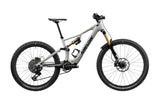
The single biggest reason for the price gap? "The PX Carbon platform is the premium model in Amflow's 2026 range," Alexander explains. "It's had extra effort and attention put into the frame design and construction. It's slimmer, it's more attractive, and it's stiffer and lighter as a result."
That extra R&D shows up most clearly for experienced riders. "For someone who already knows how to ride and can feel the difference, the PX performs better on the trail," Alexander says. "It's subtle, but it's there — the stiffer frame tips into corners a bit sharper and gives you more confidence when fast over rougher terrain."
The Battery Difference Most People Get Wrong

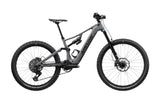
The PX Carbon uses Amflow's custom-integrated 700Wh battery, built into a noticeably slimmer downtube. The PR Carbon Pro uses a removable, higher-capacity production battery in the 800Wh class, which needs a chunkier downtube to house it. "There is a weight difference between the 700 and 800Wh battery, and that contributes to handling as well as fit," Alexander says. "The bike with the larger, removable battery bike has a slightly longer top tube and a less stiff frame — an experienced rider might feel that."
The part most people don't realise is that the PX Carbon's battery isn't actually locked in. "One of the biggest misconceptions we hear is that the PX's battery can't come out," Alexander says. "It can — most people just aren't aware of that. It's three screws to take the cover off and two bolts to take the motor out. I can remove that battery, and have it back in, in about ten minutes each way." If you were weighing the PR Carbon Pro purely because you assumed only it offered a removable battery, that assumption doesn't hold up. "If I were travelling to New Zealand with the bike, I wouldn't necessarily choose the PR just for that reason, because pulling the PX battery once or twice a year just isn't a big job," Alexander says. The PR's swap is faster and tool-free, which still matters if you're doing it often — but for occasional travel or servicing, the PX isn't the locked-in bike people assume it is.
Visually, the battery packaging is also another easy way to tell the two apart. "The PX, because of its custom battery, has a much slimmer, sleeker downtube — from a distance it's almost undetectable that it's an e-bike," Alexander says. "The PR's downtube needs the extra space for the removable battery, so it looks a bit chunkier. Some people don't mind that. Others really prefer the sleeker look."
GPS Tracking: A Real Gap on the PR Carbon Pro
One difference that's easy to miss on a spec sheet is that the PX Carbon supports a SIM card for built-in GPS tracking and alarm features. The PR Carbon Pro does not currently offer this at all. "That's a genuine point of difference," Alexander notes. If security and recovery peace of mind matter to you, it's a capability the PR Carbon Pro simply can't match, regardless of how you feel about weight or looks.
So, Is the Extra $1,300 Worth It?
After walking enough customers through this decision, Alexander has a clear read on who lands where. "When somebody goes for the PX, it's usually because they want the lower weight and a bike that feels closer to their analog bike — especially if they're not already coming from an eBike," he says. "They tend to prefer the slimmer profile as well as the lighter weight." The PR Carbon Pro appeals to riders who are more focused on value, who want the same core ride quality without paying for the frame refinement, or who plan to swap batteries frequently and want the faster, tool-free removal.
Here's the trade-off: the $1,300 premium on the PX Carbon buys you three specific things — a stiffer, lighter, better-finished frame that experienced riders will feel on the trail, a sleeker integrated battery that's still removable when you actually need it to be, and SIM-based GPS tracking the PR Carbon Pro doesn't have. If none of those three things matter much to you, the PR Carbon Pro gives you the same Avinox M2S motor, the same suspension, and the same brakes for meaningfully less money. If even one of them does — particularly the frame quality for an experienced rider, or the GPS tracking for peace of mind — the PX earns its price difference.
Frequently Asked Questions
Is the Amflow PX Carbon worth the extra $1,300 over the PR Carbon Pro?
It depends what you value. You're paying the premium for three specific things: a stiffer, lighter, more refined frame that the Head Tech has found to perform better on the trail for experienced riders, a slimmer and more integrated battery design, and built-in capability for SIM-based GPS tracking that the PR Carbon Pro doesn't have. If none of those matter to you, the PR Carbon Pro delivers the same Avinox M2S motor, suspension and brakes for less money. Neither bike is objectively "better" — the PX is Amflow's premium 2026 model, and the PR Carbon Pro is the value-focused alternative on the same platform.
Can you actually remove the battery on the Amflow PX Carbon?
Yes — and this is one of the most common misunderstandings we hear in the showroom. The PX Carbon's integrated battery isn't permanently fixed. According to our Head Tech Alexander, it takes about ten minutes each way: three screws to remove the cover and two bolts to release the motor. It's not the swap-in-seconds process the PR Carbon Pro offers, but for occasional travel or servicing, it's a genuinely small job, not a locked-in limitation.
Does the Amflow PR Carbon Pro have GPS tracking like the PX Carbon?
No. The PX Carbon supports a SIM card for GPS tracking and alarm features, and the PR Carbon Pro does not currently offer this capability at all. If bike security and recovery tracking matter to you, this is a genuine, unmatched advantage for the PX Carbon rather than a marginal spec difference.
Book a Test Ride at Our Milton Store
Spec sheets can only tell you so much — the difference between these two bikes really does come down to feel, and to what you personally value. Our Milton showroom has free parking right out front, so book a test ride appointment and throw a leg over either or both the PX Carbon and PR Carbon Pro before deciding. Alexander and the team will talk you through your riding experience, budget and priorities to help you land on the right one. For the bigger-picture view of Amflow's full Avinox range, see our PX vs PR platform guide, or browse the full Amflow range online. Book a test ride online or call us on 07 2102 9775.


