


If you own a legal, compliant 250W pedal-assist e-bike in Queensland, you may have seen headlines claiming your bike is now subject to new laws. The answer to whether you're still riding legally turns on a single piece of detail buried in the draft legislation: Queensland's e-mobility reforms reference a specific version of the European e-bike safety standard — EN15194:2017+A1:2023 — that most bikes legally sold in Australia have never been certified to. Understanding why requires a quick look at the standard's history.
The core definition of a legal e-bike has not changed. A 250W, 25 km/h pedal-assist bicycle is still a legal e-bike. But a drafting choice in QLD's proposed legislation could — if left uncorrected — make virtually every compliant e-bike on Queensland roads technically non-compliant overnight. Here is what you need to know.
What Is EN15194? The Standard That Defines a Legal E-Bike
EN15194 is the European product safety standard for Electrically Power-Assisted Cycles (EPACs). It is the internationally recognised benchmark for what legally counts as an e-bike — as opposed to an illegal high-powered electric motorbike. In Australia, EN15194 was formally introduced in 2014 as the reference standard for e-bike importation and sale.
Under EN15194, a legal e-bike is defined by three core criteria:
- Maximum continuous motor power: 250 watts
- Maximum assisted speed: 25 km/h (motor assistance cuts out above this speed)
- Power assistance only while pedalling(pedal-assist only — no throttle-only operation)
These three criteria separate a legal e-bike from an illegal high-powered electric motorbike like a Sur-Ron, which can exceed 100 km/h and requires no pedalling. That distinction sits at the heart of QLD's new e-mobility laws.
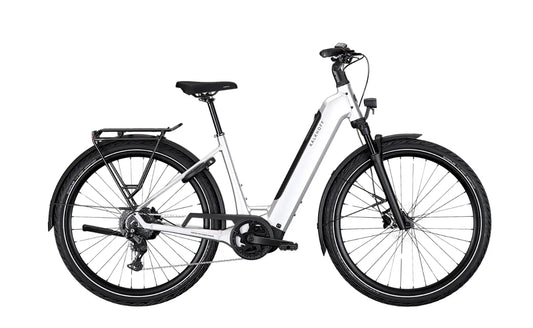
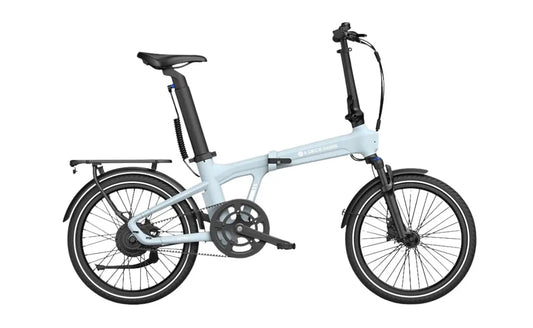
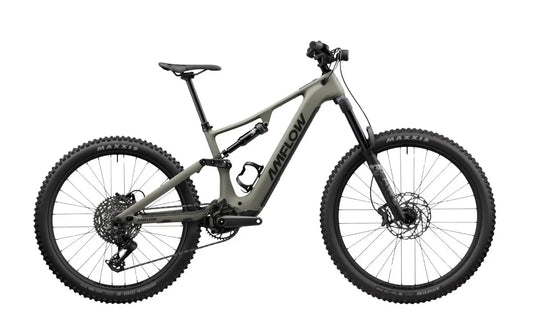
Example legal electric bikes include all Bosch-powered electric bikes, ADO folding electric bikes, and Amflow eMTBs.
The Complete EN15194 Timeline
2009 — EN15194:2009 (First Edition)
The original European standard for electric pedal-assist bicycles is published. It establishes the core definition that still holds today: 250W motor, 25 km/h assist cut-off, pedal-assist only. Australia begins using this standard as an informal reference for e-bike compliance.
2011 — EN15194:2009+A1:2011 (First Amendment)
A minor amendment to the 2009 standard. No change to the 250W/25 km/h core definition. Bikes certified to this version remain compliant under the updated text.
2014 — Australia Formally Adopts EN15194
The Commonwealth formally recognises EN15194 as the reference standard for e-bike importation and sale. Australian Road Rules align with the 250W/25 km/h definition, enabling the local e-bike industry to grow and invest with confidence.
2017 — EN15194:2017 (Second Edition)
A major structural and technical update, mandatory in the EU from April 2018. The 250W/25 km/h core definition is unchanged. Key updates include stricter electromagnetic compatibility requirements, updated test methods, more detailed electrical safety specifications, and mandatory alignment with EU Machinery Directive 2006/42/EC for EU market entry. Virtually all e-bikes sold in Australia from 2018 onwards are certified to EN15194:2017.
22 August 2022 — Amendment 1 Approved by CEN
The European Committee for Standardisation (CEN) approves Amendment 1 to EN15194:2017. The amendment has one substantive technical change: battery testing requirements. Previously, batteries could comply with either EN 62133-2 (a general lithium-ion battery standard) or EN 50604-1 (an e-bike-specific battery standard). The amendment requires EN 50604-1 only for new products. EN 50604-1 is specifically designed for e-bike applications and includes more rigorous real-world charge/discharge simulation testing.
August 2023 — EN15194:2017+A1:2023 Published
The combined standard is formally published as EN15194:2017+A1:2023. The 250W/25 km/h definition remains completely unchanged. Critically, as confirmed by the standard's own text: "This European Standard is not applicable to EPACs manufactured before the date of its publication." The EU gives manufacturers until August 2025 to transition new production to the updated battery requirement.
23 August 2025 — +A1 Becomes Mandatory in the EU for New Products
From this date, new e-bikes entering the EU market must carry EN15194:2017+A1:2023 certification with EN 50604-1 battery compliance. Existing stock certified under EN15194:2017 is not recalled, relabelled, or rendered illegal. Bikes manufactured before August 2023 are explicitly exempt under the standard's own applicability clause.
15 May 2026 — EU Transition Period Closes
The transition period between the old and new versions closes in Europe. From 15 May 2026, only EN15194:2017+A1:2023 may be referenced for new EU product certification. This has no direct effect on bikes already on the market.
December 2025 — Australia Moves to Reinstate EN15194
Following years of regulatory inconsistency and a flood of illegal high-powered electric motorbikes, the Commonwealth Infrastructure and Transport Ministers' Meeting agrees to reinstate EN15194 as the national reference standard for e-bikes. As Bicycle Network reported, the communiqué confirms the Commonwealth "will reinstate EN-15194" and work towards a regulatory framework ensuring safe and consistent supply. EN15194:2017 has already been reinserted into the definition of an e-bike in the Australian Design Rules, with an anti-tampering provision and provisions to adopt any superseding standard versions.
March 2026 — QLD Draft E-Mobility Legislation
Queensland Premier David Crisafulli announces new e-mobility legislation. The draft references EN15194:2017+A1:2023 as the required compliance standard for legal e-bikes — and requires a manufacturer's compliance label confirming this specific version. This creates a significant legal problem (explained in detail below).
Key Takeaway: The 250W/25 km/h/pedal-assist definition of a legal e-bike has not changed across any version of EN15194. The sole substantive change in the +A1 amendment is a battery testing standard — from a dual-option to a single required certification. Every e-bike legally sold in Australia before mid-2025 was certified to EN15194:2017. That does not make those bikes unsafe, non-compliant with road rules, or equivalent to an illegal electric motorbike.
What the +A1 Amendment Actually Changed (and What It Didn't)
What changed:Battery testing certification only. Under EN15194:2017, a battery could be tested to either EN 62133-2 (general lithium-ion) or EN 50604-1 (e-bike specific). Under +A1, only EN 50604-1 is acceptable for new production. The standard's published changelog confirms this as the sole significant technical change.
What did not change: The 250W motor limit, the 25 km/h assist cut-off, the pedal-assist-only requirement, and every physical or electrical aspect of the bicycle itself. A bike certified to EN15194:2017 with a compliant EN 62133-2 battery is still a safe, legally defined e-bike. The amendment tightened the paperwork trail for new production — it did not create a retroactive safety problem with bikes already on the road.
The analogy: if you bought a car in 2023 that met fuel efficiency standards of the time, it does not become illegal in 2026 because the 2025 standard requires stricter testing for new cars. Products are assessed against the standard in force at the time of manufacture — not against standards that didn't yet exist.
The Problem with QLD's Draft Legislation
The draft legislation, as written, creates three distinct and serious problems for QLD e-bike owners.
Problem 1 — The Standard Didn't Exist When Most Bikes Were Made
Any e-bike manufactured before August 2023 could not have been certified to EN15194:2017+A1:2023 — because that standard did not exist yet. Every e-bike sold in Australia between 2018 and mid-2025 was certified to EN15194:2017. Requiring retroactive +A1 compliance has no precedent in Australian or international regulatory practice, and directly contradicts the standard's own published applicability statement.
Problem 2 — The Compliance Label Cannot Be Added After the Fact
The manufacturer's compliance label for EN15194:2017+A1:2023 can only be affixed by the original manufacturer at the time of production, as part of the certified testing and documentation process. It cannot be issued, printed, or added by a retailer, importer, distributor, or government body after manufacture. This is not a paperwork inconvenience — it is a technical reality of how international product certification works. There is no mechanism by which a legally sold EN15194:2017 bike can become a labelled EN15194:2017+A1:2023 bike.
Problem 3 — It Would Make Virtually Every Compliant E-Bike in QLD Illegal Overnight
All e-bikes sold in Australia before mid-2025 were certified under EN15194:2017. That represents the overwhelming majority of bikes currently ridden on Queensland roads. If the legislation takes effect on 1 July 2026 as currently drafted, these bikes would become non-compliant overnight — not because they are unsafe, not because they behave like illegal electric motorbikes, but because of a battery certification version that postdates their manufacture.
It is equivalent to requiring every registered car in Queensland to carry a Euro 6 factory compliance plate — when most were built before Euro 6 existed.
What Grandfathering Means — and Why It's Standard Practice
Grandfathering is the regulatory principle that products which were legally compliant at the time of manufacture or supply into the market remain legal, even when standards are subsequently updated. It is how every comparable jurisdiction handles standard transitions.
Examples from Australia's own regulatory history:
- Euro 6 vehicle emissions standard: applies to new vehicles supplied from a set date, not to cars already registered.
- National Construction Code (NCC) 2022: existing buildings are exempt from new accessibility and energy provisions — only new construction must comply.
- RCM replacing C-Tick and A-Tick marks: existing stock carrying the old marks was not recalled or relabelled.
The EN15194:2017+A1:2023 standard itself is explicit on this point: it is "not applicable to EPACs manufactured before the date of its publication." No jurisdiction anywhere in the world requires EN15194:2017 bikes to be retrofitted, retested, or relabelled to +A1. The EU — which wrote the standard — applies +A1 only to new production from August 2025.
What Should the Legislation Say Instead?
The fix is straightforward and well-precedented. Three changes to the draft would resolve the problem entirely:
- Reference the standard dynamically: Draft the definition as "EN15194 as amended from time to time". This means the law automatically tracks standard updates without requiring new legislation every time CEN publishes a revision.
- Include an explicit grandfathering clause: Bikes compliant with EN15194:2017 (or any earlier version) at the time of supply into the Australian market remain fully legal under Queensland law. This is consistent with how every comparable product standard transition has been handled in Australia.
- Apply the current standard prospectively: Only e-bikes supplied into the QLD market after the legislation's commencement date need to meet the then-current version of EN15194. Existing owners are not affected.
This protects existing owners, gives the industry a clear compliance pathway for new stock, and keeps QLD's legal definition of a safe e-bike current — without manufacturing retrospective illegality.

What This Means for E-Bike Owners in Queensland Right Now
If you own a 250W pedal-assist e-bike that was legally purchased and sold in Australia, your bike is safe and has always been legal under Queensland Road Rules. The EN15194:2017 standard it was certified to defines it as an e-bike — not an electric motorbike — and nothing in the +A1 amendment changes the way your bike operates or is defined on the road.
The draft legislation described above has not yet passed. The issues outlined here are being raised through the formal government consultation and submission process, and there is a clear, workable fix available to legislators.
Electric Bikes Brisbane is actively engaged in the QLD government's consultation process, advocating for an explicit grandfathering clause and a dynamically referenced standard that keeps the law current without penalising existing owners.
If you want to add your voice to the consultation, contact us and we can point you to the right submission channel.
Ready to buy a fully EN15194-compliant e-bike with confidence? Browse Electric Bikes Brisbane's full range — every bike we stock meets the EN15194 standard, and our team can walk you through exactly what compliance means for your riding in Queensland.
Sources
- SIQ Ljubljana — Upcoming Enforcement of EN 15194:2017+A1:2023: New Requirements for E-Bike Battery Compliance
- LEVA-EU — EN 15194 After 15 May: Can You Still Sell Your EPACs?
- Bicycle Network — Feds Return to Euro E-Bike Standard
- Bicycle Network — New E-Bike Rules Falling into Place
- EN15194:2017+A1:2023 Standard Text Sample (Standards iTeh)


